



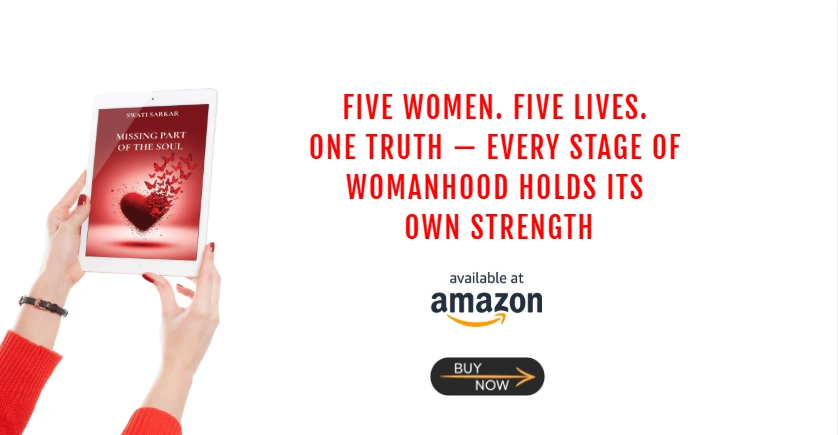
This book does not tell women who they are—it recognizes them.
Book Review: Stories That Feel Lived-In and Honest
Missing Part of the Soul is a collection of emotionally grounded narratives that explore womanhood without stereotypes or spectacle. Written by Swati Sarkar, the book follows five women at different stages of life, each navigating personal challenges shaped by age, responsibility, and emotional awareness.
From a reviewer’s perspective, the strength of this book lies in its emotional authenticity. Sharmila’s experience as a young single mother feels realistic rather than dramatized. Ruchika’s transition into marriage captures both hope and uncertainty. Meghna’s career-driven life reflects the quiet emotional costs of ambition. Nandini’s story handles grief with restraint and dignity. Chini’s reflective journey at fifty anchors the book with maturity and depth.
None of the stories seek to resolve conflict neatly. Instead, they offer recognition. This approach makes the book deeply relatable for readers who appreciate realism over resolution. Swati Sarkar writes with empathy, allowing emotions to exist without judgment.
The tone throughout the book is gentle and reflective. The inclusion of AI-supported perspectives adds subtle nuance without disrupting the human core of the narratives.
As a product, Missing Part of the Soul works best for readers who value introspection, emotional honesty, and character-driven storytelling.
What Readers Say:
I related to more than one story. — Kavita Iyer
Gentle, honest and very real. — Sunita Rao
This book understands women without explaining them. — Meenal Gupta
About the Author: Swati Sarkar
Swati Sarkar is an Indian author whose writing explores emotional realism, resilience and self-discovery. With over twenty-five years of experience as a senior interior designer, she brings depth, balance and sensitivity to her storytelling. Her work reflects culture, spirituality, and the quiet strength of human relationships.
FAQs:
Is this book suitable for all age groups?
Yes, it resonates across generations.
Are the stories interconnected?
Emotionally yes, narratively independent.
Is the tone heavy?
Reflective, not emotionally exhausting.
Who will enjoy this book most?
Readers who enjoy realistic, women-centric fiction.
